Written by
David Yap
Agentic UX explained: why everyday software is moving from dashboards into chat, how MCP changes SaaS design, and what makes a good AI agent response in 2026.

Most mornings I don't open Gmail first. I don't open Slack, our CRM, Webflow or GitHub either.
I open a chat with my agents and ask what needs me today. They have access to those tools through connectors. They read the inbox, check the pipeline, look at open pull requests, and come back with a short list. Two emails need a reply. One deal has gone quiet. A PR is waiting for my approval. Each item comes with a draft or a button, and nothing goes out until I say so.
I still use the apps, just less every month. That has changed how I think about the work we do as an agency.
Agentic UX is the design of software that people use through an AI agent. Instead of opening an app and clicking through menus, a person states the outcome they want, and an agent connected to their tools does the steps and reports back. The experience stops being the screen. The experience becomes the response.
Here's the idea I keep coming back to. Software UX as we know it, the dashboards, menus, forms and click-paths, is slowly going away for most everyday work. People will work through a chat or an agent that plugs into the tools they already pay for. Chat UX and conversational interface design used to mean designing a chatbot's script. In agentic UX the conversation is where the actual work gets done.
Jakob Nielsen, Sequoia, Satya Nadella and a16z all described this shift before the tools caught up. Nielsen called AI the first new UI paradigm in 60 years. Sequoia framed it as selling outcomes instead of seats. Nadella said SaaS apps will become backends for agents. a16z wrote that the interface becomes an agent layer.
I'm not the first person to say this, and it's worth crediting the people who got here earlier.
In 2023 Jakob Nielsen called AI the first new UI paradigm in 60 years. His name for it is "intent-based outcome specification". In his words, "the user tells the computer what outcome they want" instead of issuing commands one at a time. He also predicted that clicking and tapping would survive "in a less dominant role", inside a hybrid interface. I think he's right on both counts.
Sequoia's Sonya Huang and Pat Grady framed the money side in Generative AI's Act o1 (October 2024): "Cloud companies sold software ($ / seat). AI companies sell work ($ / outcome)". If you sell outcomes, the screen matters less. The result is the product.
Satya Nadella went further in a May 2025 interview with Matthew Berman. Talking about an agent orchestration layer, he said "That layer is going to have multiple backends. Your SaaS app will be one of them. You'll need to support something like MCP to participate."
And a16z has been writing about it for a while. In their Big Ideas 2026 list, Sarah Wang wrote that "The interface becomes a dynamic agent layer", and Stephenie Zhang wrote "We're no longer designing for humans, but for agents." In May 2026 Seema Amble asked Is Software Losing Its Head?, pointing out that agents "can read and write directly to the underlying data" instead of going through the UI.
So the idea isn't new. What's new is that the plumbing now exists.
The Model Context Protocol (MCP) is an open standard, released by Anthropic in November 2024, for connecting AI assistants to the systems where data lives. One agent can talk to email, a CRM, a CMS and a code host without a custom integration for each pair. MCP Apps and Google's A2UI then let agent responses include interactive interfaces.
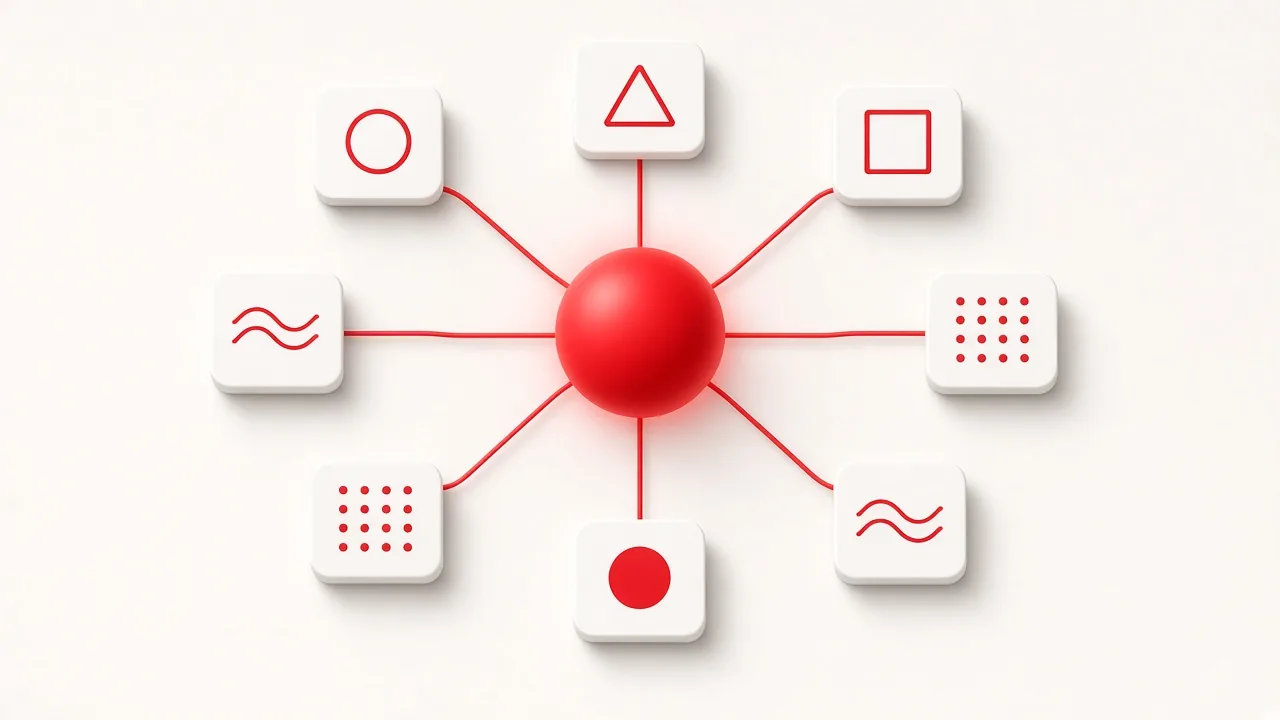
In November 2024 Anthropic open-sourced the Model Context Protocol, an open standard for connecting AI assistants to the systems where data lives. MCP lets one agent talk to your email, CRM, CMS and code host without a custom integration for each pair.
It spread fast. By December 2025, when Anthropic donated MCP to the new Agentic AI Foundation under the Linux Foundation, the maintainers reported over 97 million monthly SDK downloads, 10,000 active servers, and client support in ChatGPT, Claude, Cursor, Gemini, Microsoft Copilot and VS Code.
Then the responses started getting interfaces. In October 2025 OpenAI launched apps in ChatGPT, built on MCP, with launch partners including Booking.com, Canva, Coursera, Figma, Expedia, Spotify and Zillow. OpenAI described them as apps that "respond to natural language and include interactive interfaces you can use right in the chat." In December 2025 Google released A2UI, an open format that lets agents send interfaces built from a client's own trusted components. And in January 2026 MCP Apps became an official MCP extension: "Tools can now return interactive UI components that render directly in the conversation."
The incumbents moved too. In April 2026 Salesforce launched Headless 360 with the line "Everything on Salesforce is now an API, MCP tool, or CLI command, and agents can use all of it." The same announcement quotes co-founder Parker Harris asking "Why should you ever log into Salesforce again?" and has a section titled "the conversation is the interface". When Salesforce says that out loud, the shift is real.
Investors noticed. The Batch reported that the S&P Software & Services Index lost 25 percent of its value between January 12 and February 23, 2026, after Anthropic launched Claude Cowork and a set of job-function plugins. A Jefferies strategist called it the "SaaSpocalypse". The same piece made the sensible counterpoint, which I agree with: "SaaS isn't dying, it's becoming AI-native."
Response UX is the design of an AI agent's answer as the product experience. A good response has a structure that matches the question, says which systems it touched, asks before anything that sends, pays, deletes or publishes, uses rich components such as tables or forms where text falls short, and shows honest progress while it works.
If the response is the experience, then designing the response is the job. A wall of text is the chat equivalent of a cluttered dashboard. It technically works and nobody enjoys it.
From running my own company this way, five things separate a good response from a bad one.
If I ask for leads that need follow-up, I want a short table with name, last contact and the next step. Not four paragraphs. If I ask "should I merge this?", I want a yes or no, the reason, and the risk.
When an agent touches five systems to answer one question, I need to know which five. "I checked the inbox and the CRM, updated the deal stage, and didn't touch the calendar" builds more trust than a confident summary with no receipts. Links back to the source record matter. I want to click through and check.

Reading is cheap. Sending, paying, deleting, publishing and deploying are not. My agents draft emails and Slack messages, and I approve them. A good response shows exactly what will go out, to whom, and gives me one clear action to approve it. Bad agent UX either asks permission for everything, which gets ignored, or for nothing, which gets you in trouble.
A draft email should look like an email. A comparison should be a table. A schedule should be a small calendar. This is exactly what MCP Apps and A2UI are for. Google's A2UI post uses a good example: booking a restaurant table by text turns into a long back-and-forth about days and times, when a small form with a date and time picker does it in one step.
Agents are slower than a page load. Google's own generative UI research notes their implementation "can sometimes take a minute or more to generate results". A response that says what it's doing ("reading 14 emails, checking the CRM") feels faster than a spinner, and lets me walk away and come back.
MCP moves the front door of a SaaS product from its logged-in UI to its API and connector. Customers increasingly reach the product through an agent, so every action needs to be available through the API, data and error messages must make sense without screens, permissions must be granular, and the product must work inside whichever agent the customer chose.
If your customers reach you through an agent, your API and your connector become the front door. The logged-in UI becomes the back office. It's where admins configure things, where people go when the agent gets stuck, and where someone audits what happened.
Your API needs to be complete. If an action exists only in the UI, agents can't do it, and you look weaker than a competitor whose API covers everything.
Your data needs to make sense without your screens. Field names, descriptions and error messages are now read by models as much as by people. "Error 4012" helps nobody. "This contact has no email address, so the sequence can't start" lets the agent fix it or ask the user.
Permissions need to be granular. I want my agent to read our CRM and write notes, but not delete records. Seema Amble makes the same point at a bigger scale: the hard question becomes "which agents are authorized to do what, on whose behalf, with what auditability?"
Assume you won't own the conversation. I like tools that let me swap the model underneath depending on the job, instead of being locked into one provider. The SaaS companies that win will work well inside whatever agent the customer picked, not only inside their own built-in assistant.
The clearest early moves are in B2B software and systems of record, customer support, ecommerce and retail, travel and property, legal and professional services, healthcare administration, and agencies and marketing. In each of these, a major vendor, protocol or analyst has already made a concrete move toward agents, not just talked about it.
B2B SaaS and systems of record. CRM, ITSM and ERP are the obvious ones. Salesforce going headless and Sarah Wang's prediction that systems of record "lose primacy" both point here. Amble adds a useful caveat: compliance-heavy categories like financial services may hold on longer, because a trusted single source of truth still matters.
Customer support. Gartner predicts that by 2029, agentic AI will resolve 80% of common customer service issues without human intervention, cutting operational costs by 30%. Gartner also expects service teams to deal with "machine customers", meaning the customer's own agent on the other end.
Ecommerce and retail. In September 2025 Stripe and OpenAI released the Agentic Commerce Protocol and Instant Checkout, so US ChatGPT users can buy from Etsy sellers inside the chat. In January 2026 Google launched the Universal Commerce Protocol, co-developed with Shopify, Etsy, Wayfair, Target and Walmart, covering "discovery and buying to post-purchase support". Your product page is becoming a data feed for agents.
Travel and property. Booking.com, Expedia and Zillow were among the first apps inside ChatGPT. OpenAI's own example is browsing home listings on an interactive map inside the chat.
Legal and professional services. After Anthropic released plugins for things like legal review and financial analysis, The Batch reported that LegalZoom shares fell nearly 20 percent in the selloff. That's a market reaction, not proof of anything, but it shows where investors think the exposure is.
Healthcare admin. Not clinical care, the admin around it. UChicago Medicine announced it is using agents for non-clinical requests like prescription refills and appointment scheduling through a chat interface.
Agencies and marketing. This one is personal. Stephenie Zhang's point that "the new optimization isn't for visual hierarchy, but for machine legibility" applies directly to websites and content. More people will meet your business through an AI answer before they ever land on your homepage. We see it on our own site: as we wrote in our guide to AI in UX design, ChatGPT and Gemini now refer over 100 sessions per quarter to zensite.co. That is why our on-page SEO work now covers how pages read to AI search as well as to people.
No. Screens stay for work that is visual or spatial, like design, video editing, maps and floor plans. They stay for open-ended exploration, when you don't yet know the question. And review screens become more important, because when agents do more of the work, people spend more of their time checking it.
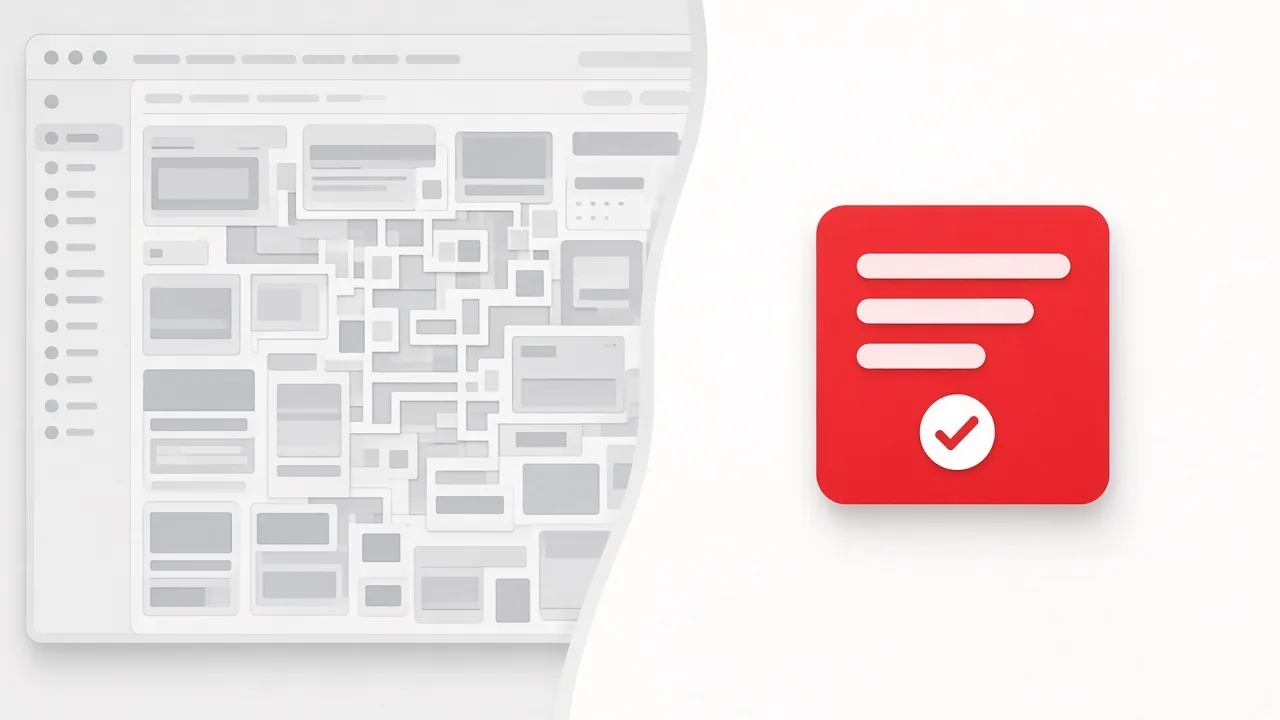
Design work stays visual. You can ask an agent to tweak a layout, but you still need to see it. Same for video editing, maps, floor plans, anything where you're arranging things in space.
Exploration stays visual too. Sometimes you don't know the question yet. Browsing a dashboard and noticing something odd is different from asking a precise question.
Craft still wins. In Google's generative UI study, websites designed by human experts still had the highest preference rates, ahead of the AI-generated interfaces.
And review surfaces get more important, not less. When agents do more of the work, people spend more time checking it. A clean diff, a preview link, an approval queue. In my own setup the most useful page I have is a simple dashboard showing what each agent did and what's waiting on me.
Gartner predicts that 40% of enterprise applications will have task-specific AI agents by the end of 2026, and that by 2028 a third of user experiences will shift to agentic front ends. It also predicts over 40% of agentic AI projects will be canceled by the end of 2027. My own predictions follow.
These are predictions, so take them as such. First, other people's.
Gartner predicts that 40% of enterprise applications will have task-specific AI agents by the end of 2026, up from less than 5% in 2025. The line closest to this post is from the same release: by 2028, "a third of user experiences will shift from native applications to agentic front ends."
Gartner also gives the counterweight. It predicts over 40% of agentic AI projects will be canceled by the end of 2027, "due to escalating costs, unclear business value or inadequate risk controls", and warns about "agent washing", where old chatbots get rebranded as agents.
Now mine.
Designers should treat agent responses as a design surface. SaaS teams should audit their API against their UI and decide where MCP Apps or A2UI help. Business owners should map where their team clicks between tools, because those are the first places an agent connected to the existing stack can help, with a person approving the steps that matter.
If you design or build software, treat responses as a design surface. Sketch them. Write the copy for the confirmation step. Decide what a good answer looks like for the ten most common questions your users ask. A UX review of those moments is a good place to start, and fast prototypes help too; our vibe coding guide shows how to test them in hours.
If you run a SaaS product, audit your API against your UI. List every action a user can take in the app and check whether an agent can take it too. Then look at whether MCP Apps or A2UI make sense for the moments that need more than text.
If you run a business, map where your team spends time clicking between tools. Those are the first places an agent connected to your existing stack can help. You probably don't need new software. You need the software you have to talk to each other, with a person approving the steps that matter.
I'm not sure how fast this goes. Some teams will move in a year, some will take a decade. But I've stopped designing on the assumption that someone will always come through the front door and click around. More often now, they ask, and the answer has to be good.
Agentic UX is the design of software that people use through an AI agent. The person states an outcome, and an agent connected to their tools carries out the steps and reports back. The designer's job shifts from arranging screens to shaping what the agent can do, how it asks for approval, and how it presents results.
Response UX is the design of an AI agent's answer as the main user experience. It covers the structure of the answer, the record of what the agent did, the confirmation step before consequential actions, interactive components like tables and forms, and progress states while the agent works. A wall of text is the chat equivalent of a cluttered dashboard.
The Model Context Protocol lets AI agents connect to a SaaS product through a standard interface, so customers can use the product without opening its UI. The API and connector become the front door, while the logged-in interface becomes the place for setup, exceptions and audits. MCP Apps also let tools return interactive UI inside the conversation.
Not anymore. Classic conversational interface design scripted a chatbot's dialogue for a narrow task. In agentic UX the conversation is where real work happens across several connected tools, so the design work covers permissions, confirmations, receipts and rich components, not only the wording of each reply.
Not entirely. Agents will handle more routine tasks, but visual work, open-ended exploration and review still need screens. Websites are likely to serve two audiences: people, who need trust and taste, and agents, which need clean structure and facts. Most businesses will need to design for both.
Start by listing every action a user can take in the app and checking whether an agent can take it through the API. Rewrite field names and error messages so a model can understand them, add granular permissions, and make sure the product works inside the agents customers already use, such as ChatGPT, Claude and Gemini.
Agentic UX is the shift from software people click through to software they ask. The Model Context Protocol made it practical by connecting agents to the tools businesses already use, and MCP Apps and A2UI let agent responses carry real interfaces. When the response is the product, designing the response is the job: match the structure to the question, show what was done, ask before anything consequential, use rich components where they help, and show honest progress. Screens stay for visual work, exploration and review.
At Zensite we design and build websites, SEO and product interfaces with this shift in mind, from our offices in Singapore and Kuala Lumpur. That includes content that AI search can read, review screens for teams working alongside agents, and AI-assisted design workflows where we set up Figma and MCP connections for design teams. You can see examples in our work. If you're thinking through what it means for your product or your site, book a call with us.
David Yap is the Co-founder & CEO of Zensite, a UI/UX design and Webflow agency with offices in Singapore and Kuala Lumpur.

David is the founder of Zensite, a product design agency based in Singapore. Since 2016, David have been involved in many UI UX related topics covering user experience, product design, digital experience and also founded Friends of Figma, a Figma Community in Malaysia.

Gain access to top-notch creatives from an experienced design agency through a flat monthly design subscription service. Start your design project with us today!
We’d love to learn more about your company and how we can help you. Tell us about your project in the form, and we’ll put you in touch with the right team to get an estimate or quote.
If you have a RFQ or brief, please send to sales@zensite.co
If you are looking for a retainer based service, please check out our design subscription.
